THE CURRENT
Google opens Carbon to more users
Developers gain paid API access and subscribers get a broader rollout. Long runs still need to justify their cost.
A wider release on November 10
Google has broadened access to Gemini 4 Carbon after its earlier, limited cybersecurity introduction. Developers can use the paid Gemini API in AI Studio and Android Studio. Google AI Ultra subscribers are gaining access through consumer and developer products. Carbon for cyber remains available through the Fairwind program. [1, 2]
The public-access model’s introductory API price is $2 per million input tokens and $10 per million output tokens through November 30. Google says the rates then rise to $4 and $20. These are token prices, not a fixed fee for finishing a project. [1]
Carbon uses more tokens than Argon for extended exploration and verification. That matters when a task branches, retries or delegates: a lower headline rate need not mean a smaller bill. [1]
Inside this edition
02 Firefox reduces fingerprint uniqueness
03 A metal structure survives 100 million cycles
Parallel work needs a test
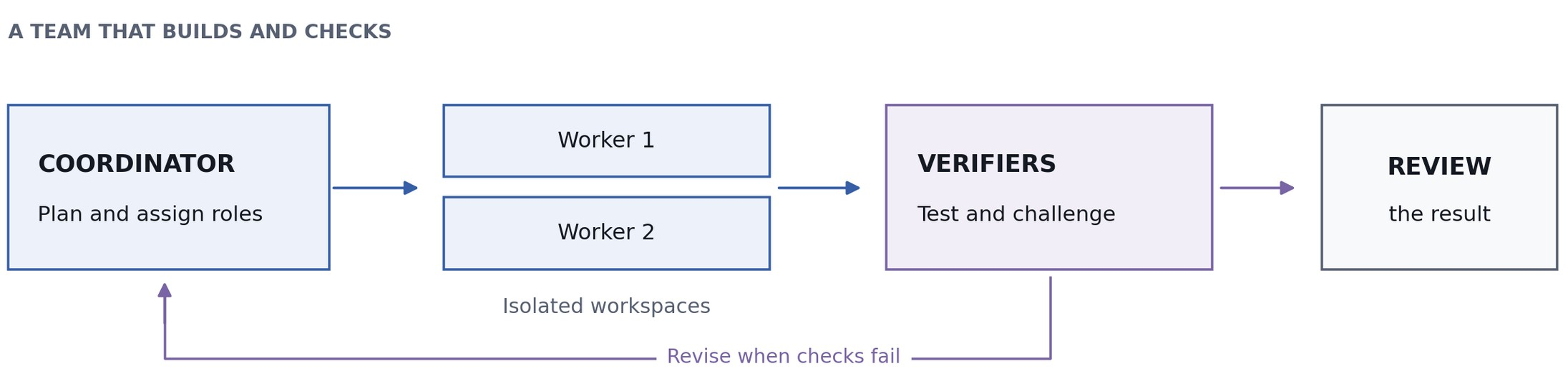
Google’s /swarm preview assigns work to specialized agents in isolated Git worktrees. They exchange messages on a shared board, while verifier agents challenge changes and run tests. Carbon can handle coordination or auditing while lighter models perform routine edits. Google warns that parallel teams consume quota faster than a standard chat. [3]
The practical test is straightforward: did the system finish the intended change, pass a meaningful check and save human review time? A team of agents can generate more work without settling those questions. Google’s reported benchmark leads should be read as reported results, not a guarantee for a particular repository.
What pass or fail can hide
A November 10 preprint by Zihan Dong and colleagues argues that pass/fail scores can conceal differences in the quality of agent outputs. Its proposal preserves graded performance and treats cost separately. The finding is preliminary, but the question is timely: what does a leaderboard discard when it reduces a run to one bit? [4]
[2] Developer access
WEB PRIVACY / RESEARCH PUBLISHED NOVEMBER 10
Firefox makes browsers look more alike
A large study finds that a few revealing device details carry much of a fingerprint’s identifying power. Hiding them helps, but does not end tracking.
A fingerprint without a cookie
A website can combine ordinary details such as screen dimensions, fonts and processor information into a distinctive profile. Deleting a cookie does not erase those characteristics. Mozilla’s November 10 research disclosure describes defenses that make groups of Firefox users harder to tell apart. [5]
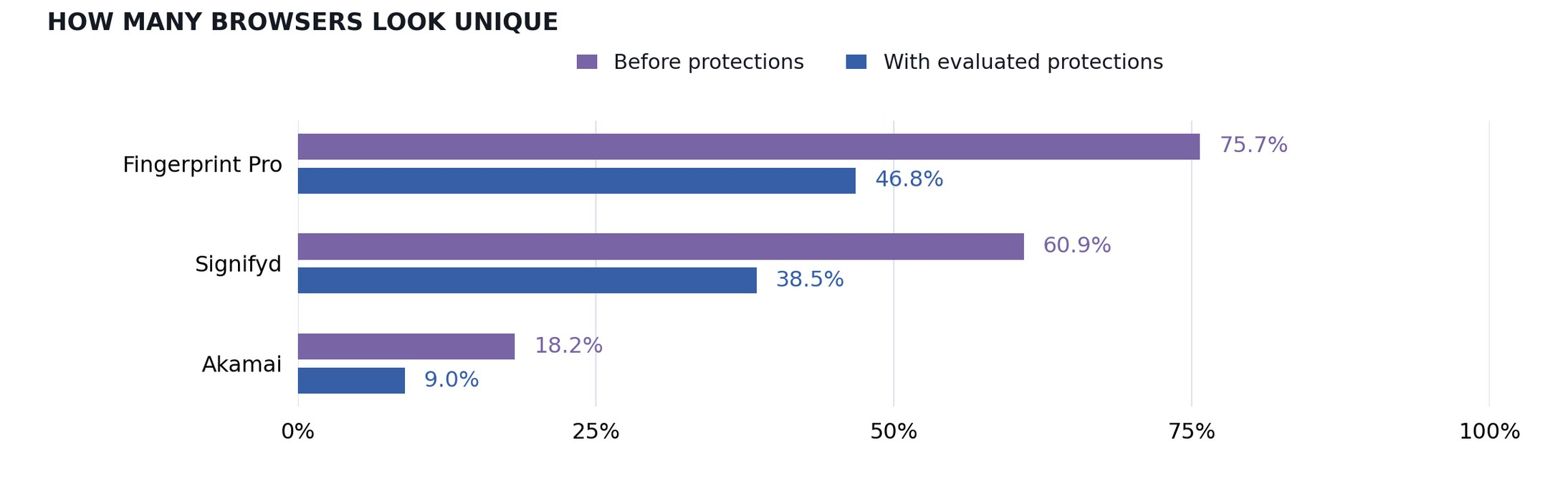
The study used telemetry from almost 25 million Firefox users and simulated commercial fingerprinting services. Its headline result is a decline from roughly 75% to 46% in the share with a unique fingerprint under the evaluated protections. The paper connects those defenses to Firefox 143; the later blog also discusses additions through Firefox 145. This is a research report on shipped work, not a new browser launch. [5, 6]
The mechanism is selective. Screen APIs can conceal taskbar or dock layout. Processor counts can be reported in broad groups, such as four or eight, instead of exact values. Useful settings like language and time zone remain available. [5]
The average hides the mechanism
Results vary sharply by operating system. The researchers report that clamping available screen resolution reduces cumulative uniqueness by 25.3 percentage points on macOS, but only zero to three points on the other platforms studied. A single global average would make that particular defense look much less consequential. [7]
Uniqueness is also only part of the story. Two browsers sharing a fingerprint have little company; a million browsers sharing one have much more. The work therefore measures the sizes of groups that remain indistinguishable, rather than merely counting which users stopped being unique. [7]
What the evidence does not say
The population is Firefox users, not the whole web. The services are modeled, and trackers can change their methods. A smaller unique fraction does not establish that the same fraction of real-world tracking attempts has disappeared. [5, 6]
Some protections are default; others first appear in Private Browsing or Strict Enhanced Tracking Protection. Mozilla recommends Strict for broader coverage, with site-specific exceptions if functionality breaks. The tradeoff remains concrete: exposing fewer details while keeping ordinary websites usable. [5]
[5] Mozilla research disclosure · Nov 10
[6] Ritter et al · CCS 2026 paper
MATERIALS SCIENCE / THIS WEEK IN RESEARCH
A cooling metal built to endure
Stacking thin nickel–titanium chips tackles a practical obstacle for solid-state refrigeration: surviving the same mechanical cycle again and again.
The result
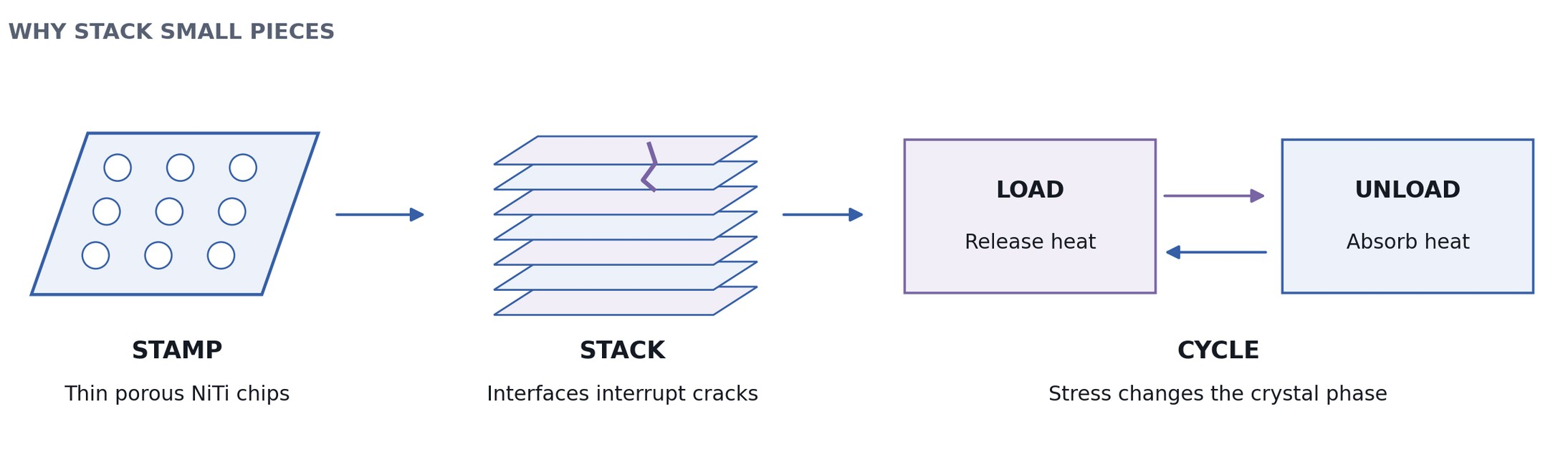
A nickel–titanium structure reported in Science on November 5 endured more than 100 million compression cycles. The team, led at the Hong Kong University of Science and Technology, stamped porous chips from thin sheets and assembled them into a layered tube. [8]
The material is a shape-memory alloy. A reversible change in its crystal phase lets it absorb and release heat as mechanical stress changes. An elastocaloric cooling system uses that behavior to move heat, rather than relying on the evaporation and condensation of a conventional refrigerant. [9]
The architecture matters because a useful refrigerant must exchange heat quickly without cracking or buckling. Porous chips increase the surface available for heat exchange; their layered arrangement helps resist the failure modes of a continuous tube. [8]
The manufacturing question
The paper reports a roughly order-of-magnitude fabrication-cost reduction against existing approaches. That is a claim about making the refrigerant structure, not the retail price of a refrigerator. A cheap material component still needs to become a dependable complete machine. [8]
What the prototype actually did
HKUST’s November 6 release describes a 30-millimeter unit made from 200 stacked chips. The prototype reached a maximum temperature span of 11.7 kelvin, equivalent to an 11.7°C temperature difference. The paper reports specific cooling power of 3,850 watts per kilogram of refrigerant. [8, 9]
Neither number is a household appliance’s total cooling capacity or electricity consumption. The published maximum temperature span and specific power should not be read as a single demonstrated operating point.
The university estimates a service life beyond ten years under the tested operating conditions. That is an extrapolation from cycling, not a decade of field operation. The team still plans to improve heat transfer, actuation efficiency and the alloy itself. [9]
Why this is worth following
A long-lived solid refrigerant could remove one obstacle to an alternative cooling technology. The next comparison needs to be at the system level: how much electricity the actuator and pumps consume, how much heat the device moves at a useful temperature difference, and how it behaves outside a controlled test.
The study advances a component that commercial cooling would need. It does not establish that a finished machine is ready to replace vapor-compression equipment.